


What Happens When You Call for Emergency Water Damage Help?
When water floods your Chandler home, what happens next depends on who you call and how fast they arrive. Voda Cleaning & Restoration of Phoenix provides emergency water damage restoration across the East Valley with a guaranteed two-hour arrival. Most calls get a crew on site within an hour.
In Arizona’s desert heat, moisture doesn’t sit still. It moves through drywall, saturates slab edges, and creates conditions for mold growth faster than you’d expect. Understanding the response process can help you feel more in control during a stressful situation.
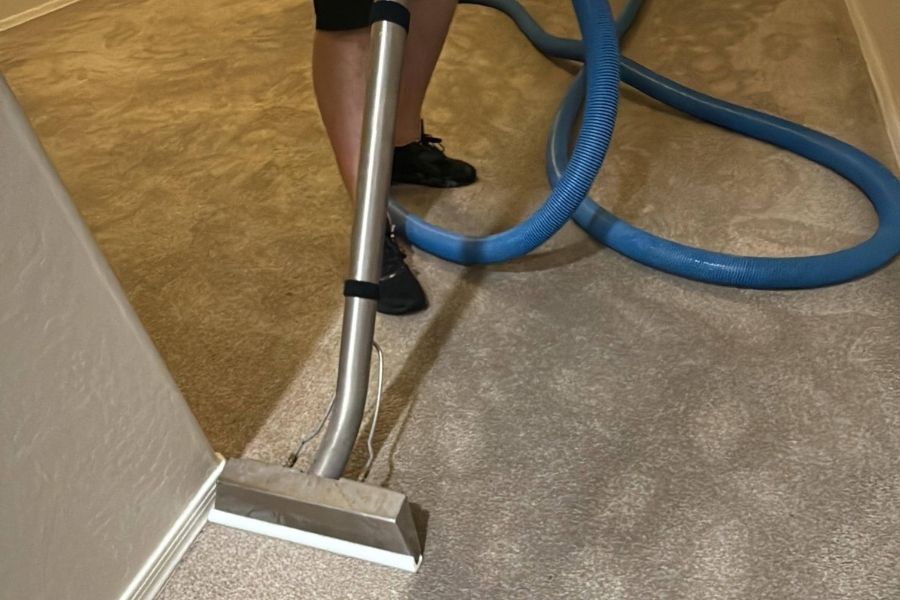
Emergency water extraction on carpet. The sooner this starts, the less material needs to be removed later.
What Happens During the Initial Phone Call?
The first phone call is a triage conversation, not a sales pitch. Voda’s team asks targeted questions to understand the situation before a truck ever leaves the shop. They need to know what kind of water you’re dealing with, where it’s coming from, and whether it’s still flowing.
They’ll ask where the water is coming from, whether it’s still flowing, what rooms are affected, and if there are safety concerns near outlets. These questions help the crew load the right equipment. A sewage backup requires different tools than a broken supply line under a kitchen sink.
For overnight emergencies, calls go directly to the company owner. Not a call center in another state. Someone local who dispatches a crew immediately.
What Does a Two-Hour Guaranteed Arrival Actually Mean?
Voda guarantees a crew on site within two hours of your call, and most arrivals happen in under 60 minutes. That guarantee applies around the clock, including weekends, holidays, and monsoon season when every restoration company in the Valley is slammed.
The IICRC S500 Standard for Professional Water Damage Restoration emphasizes that secondary damage accelerates rapidly once moisture enters building materials. In Chandler’s climate, where summer temperatures regularly top 110 degrees, heat and humidity turn a manageable water event into a mold problem in as little as 24 hours.
Wet drywall starts breaking down within hours. Carpet padding traps moisture underneath. Slab-on-grade foundations, the standard construction in Chandler, wick water along their edges into rooms you haven’t noticed yet.
What Happens During the First Hour on Site?
The first hour is all about assessment, not demolition. Technicians walk the property with moisture meters, infrared cameras, and a trained eye to map exactly where the water has traveled. You might think the damage stops at the wet carpet you can see. It almost never does.
First Hour Response Checklist
✓ Safety check (electrical hazards, structural concerns, contamination level)
✓ Source identification and water shutoff confirmation
✓ Moisture mapping with meters and thermal imaging
✓ Water category classification (clean, gray, or black water)
✓ Photo and video documentation for your insurance file
✓ Emergency water extraction begins
Chandler homes sit on slab foundations, so water doesn’t drain down. It spreads laterally. A leak in the kitchen can show up as moisture in a hallway wall 20 feet away. Without detection equipment, you’d never know until mold started growing weeks later.
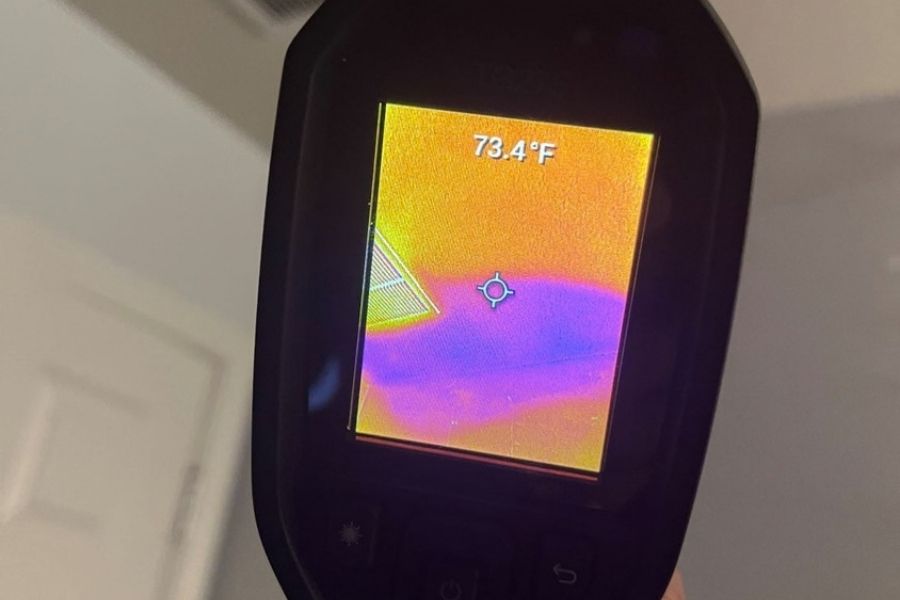
Thermal imaging reveals water damage hiding behind ceilings and walls that you’d never spot with the naked eye.
How Does the Drying and Restoration Process Work?
Once assessment is complete, extraction and drying equipment goes in immediately. Air movers, commercial dehumidifiers, and specialty drying systems get placed strategically based on the moisture map. Not a fan pointed at a wet spot. A calculated drying plan.
Drying typically takes three to five days for standard water damage restoration in Chandler. Technicians return daily to take moisture readings and adjust equipment placement. The goal is target moisture levels confirmed by metered data, not “it feels dry.”
| Water Category | Common Sources | Typical Drying Time |
|---|---|---|
| Category 1 (Clean) | Supply lines, faucets | 3-4 days |
| Category 2 (Gray) | Dishwasher, washing machine | 4-5 days |
| Category 3 (Black) | Sewage, storm flooding | 5-7+ days |
One thing worth knowing: Category 1 water doesn’t stay clean forever. Water sitting on carpet or drywall for more than 48 hours starts growing bacteria and gets reclassified. That means more aggressive treatment, more materials removed, and higher costs.
Dealing with water damage in your Chandler home right now?
Schedule Your Free InspectionAvailable 24/7 • On-site in about an hour
What About Insurance and Documentation?
Voda Cleaning & Restoration of Phoenix works directly with insurance companies on water damage claims, handling documentation from the first visit. Every photo, moisture reading, and equipment log gets compiled into the file your adjuster needs. You don’t have to chase paperwork or figure out what your carrier requires.
Documentation starts during the first-hour assessment and continues through every daily monitoring visit. Insurance companies want to see evidence that proper protocols were followed. IICRC-certified technicians know exactly what that documentation needs to include.
Not sure if your situation is covered? Here’s a look at how homeowners insurance handles water damage in Arizona.
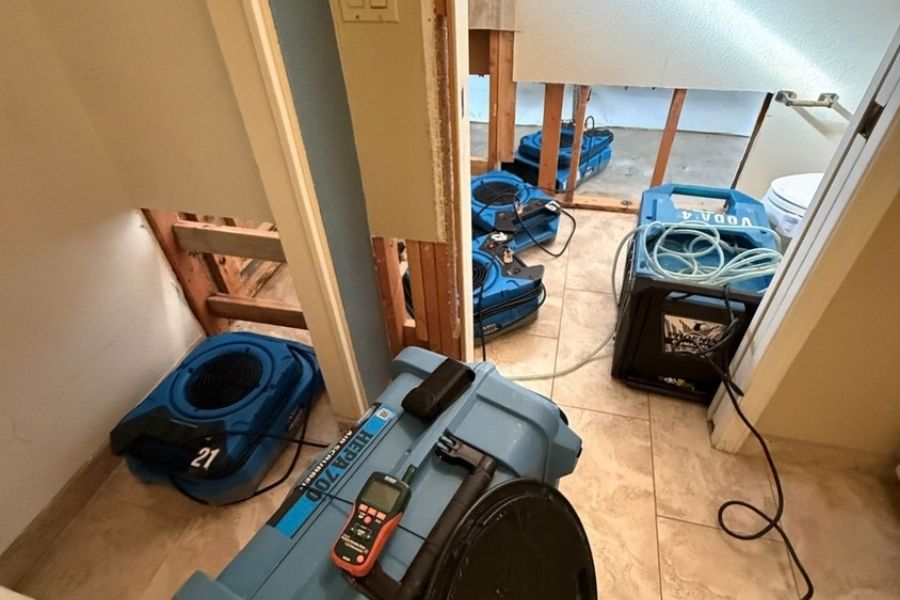
After affected materials are removed, drying equipment runs continuously with daily monitoring until target moisture levels are reached.
Why Does Certification Matter in an Emergency?
IICRC certification means the technicians responding to your emergency have been trained and tested on current industry standards for water, mold, and fire restoration. It’s ongoing education backed by the organization that sets the standards insurance companies reference when evaluating claims.
Voda’s team holds certifications across all three primary restoration disciplines. That matters because water damage rarely stays a single-service problem. A pipe burst can lead to mold growth requiring professional remediation if drying isn’t done correctly. According to Ready.gov’s federal flood safety guidance, reducing moisture quickly is one of the most important steps homeowners can take to prevent secondary damage.
What Should You Do Before the Crew Arrives?
While you wait for the restoration team, a few simple steps can prevent additional damage. Don’t use a household vacuum on standing water, and avoid flooded areas near electrical outlets.
- Turn off the water source if you know where the shutoff valve is
- Move valuables to a dry area if safe to do so
- Turn off the HVAC to prevent spreading moisture through ductwork
- Take photos and video before anything gets moved
Don’t stress about having everything perfect before the crew arrives. That’s their job. For more on those first steps, check out what to do in the first hour after water floods your home.
Voda Cleaning & Restoration of Phoenix
24/7 Emergency Water Damage Response Across Chandler and the East Valley
Frequently Asked Questions
How quickly can a restoration crew get to my Chandler home after I call?
Voda Cleaning & Restoration of Phoenix guarantees a two-hour arrival time, but most emergency calls in Chandler and the East Valley get a crew on site within about an hour. This applies 24/7, including holidays and monsoon season.
Do I need to file my own insurance claim before calling a restoration company?
No. Call for restoration help first, then notify your insurance company. Voda works directly with carriers and handles the documentation your adjuster needs.
Will the restoration team need to remove my walls or flooring?
It depends on the water category and how long materials were wet. Drywall can often be dried in place if the crew responds quickly. Contaminated or long-saturated materials may need targeted removal to prevent mold.
What if I notice a musty smell after the drying process is complete?
A lingering musty smell could indicate hidden moisture or early mold growth. Contact the restoration company for a follow-up inspection with moisture meters. Catching it early prevents a much bigger problem.

More Blogs


Categories