


Table of Contents
- 1. 1. Cut Off the Water Source First
- 2. 2. Stay Out of Standing Water Near Electrical Sources
- 3. 3. Document Everything Before You Touch It
- 4. 4. Move What You Can (Quickly)
- 5. 5. Get Air Moving
- 6. 6. Call Your Insurance Company
- 7. 7. Call a Professional Restoration Team
- 8. Why Desert Heat Makes Secondary Damage Worse
- 9. Frequently Asked Questions
- 9.1. How long do I have before mold starts growing after a flood in Phoenix?
- 9.2. Can I dry out a flooded room myself with fans and a dehumidifier?
- 9.3. Does homeowner's insurance cover flood damage from a burst pipe in Chandler, AZ?
- 9.4. What makes water damage worse in slab-on-grade homes like most in the East Valley?
You didn’t plan for this. One minute everything was normal, and the next your floor is covered in water and your brain is doing that thing where it short-circuits and you just stand there. It happens. But here’s the thing: what you do in the first 60 minutes after a flood in your Chandler or Phoenix-area home matters more than almost anything that follows. Faster action means less damage, lower costs, and a much smoother insurance claim. If you’re dealing with an active flood right now, the first call you should make is to a professional water damage restoration team. Then read this.
Flooding in Chandler or the Phoenix Area?
Voda Cleaning & Restoration of Phoenix responds within 2 hours, 24/7/365. Free inspections, direct insurance coordination, IICRC-certified team.
The 60-Minute Clock: What’s Happening to Your Home Right Now
| Time Elapsed | What’s Happening |
|---|---|
| 0-5 minutes | Water saturates drywall, insulation, and flooring materials |
| 5-20 minutes | Furniture dyes and finishes begin bleeding; electronics at risk |
| 20-60 minutes | Swelling begins in wood floors, doors, and trim; odors start developing |
| 1-24 hours | Mold spores can begin colonizing wet surfaces in Phoenix-area heat |
| 24-72 hours | Visible mold growth, structural warping, serious secondary damage |
1. Cut Off the Water Source First
If water is still actively entering your home, stopping the source is the most important thing you can do. Everything else on this list comes after that.
- If it’s a burst pipe or appliance leak, shut off the main water supply to your home. In most Chandler and East Valley homes, this is near the street or at the side of the house.
- If it’s monsoon flooding coming in through doors, windows, or a leaking roof, you can’t stop the rain, but you can try to redirect water away from entry points with towels, sandbags, or whatever you have on hand.
- If you’re not sure where your main shutoff is, this is a genuinely good thing to know before you need it. Mark it, and make sure your household knows where it is.
Once water stops flowing in, you can think clearly about the next steps.
2. Stay Out of Standing Water Near Electrical Sources
Water and electricity are a dangerous combination, and slab-on-grade homes (which describes most of Chandler, Gilbert, Mesa, and the broader East Valley) have outlets and appliances sitting close to floor level. Before you wade in, think about what’s around you.
- If you’re not sure whether the electrical system has been compromised, don’t enter the flooded area until you’ve shut off power to that part of the house at the breaker box.
- If the breaker box itself is in the flooded area, call an electrician or your utility company before touching anything.
- Plugged-in appliances, power strips, and anything corded on the floor should be considered a hazard until confirmed safe.
This one isn’t worth guessing on. Err on the side of caution.
3. Document Everything Before You Touch It
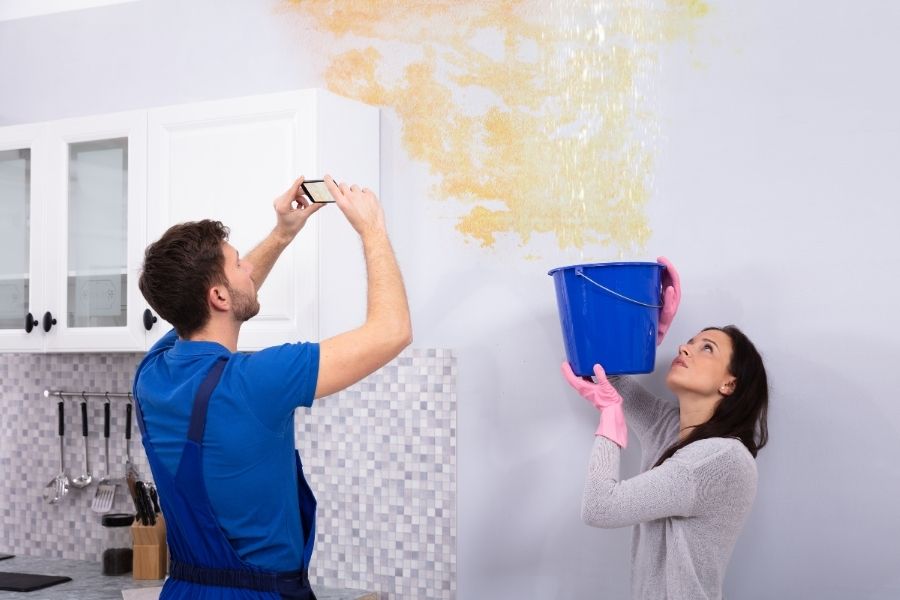
Your phone camera is one of the most valuable tools you have right now. Before you move furniture, pull up carpet, or start mopping, take photos and videos of everything.
- Walk through every affected room and document the standing water, soaked walls, damaged furniture, and any visible structural issues.
- Capture wide shots showing the full scope of the room, then close-ups of specific damage.
- Note the time stamps on your photos. Insurance adjusters will reference these.
- If you can, document the source of the flooding too (the burst pipe, the overflowing toilet, the water heater) before anything is moved or repaired.
You’ll thank yourself later. Insurance claims go much more smoothly when there’s solid visual documentation from the first hour. Speaking of which, see what water damage restoration in Phoenix typically costs so you know what to expect.
4. Move What You Can (Quickly)
Once you’ve documented the damage, start rescuing things that are salvageable. Water doesn’t discriminate, and the longer materials stay wet, the worse the outcome.
- Move rugs, furniture, clothing, and personal items out of the water and into a dry area or outside.
- Elevate furniture legs off wet carpet using foil, wood blocks, or anything that creates separation between the wet surface and the furniture base.
- Get electronics, documents, and irreplaceable items out first.
- Don’t throw anything away yet. Even items that look ruined may be salvageable, and your insurance adjuster may need to see them.
Keep in mind that in Phoenix-area summer heat, materials that are left wet in a warm, humid space will deteriorate faster than they would in a cooler climate. Speed is your friend.
5. Get Air Moving
Ventilation slows mold growth and begins the drying process. You’re not going to dry out a flooded room with a fan alone, but getting air moving in the first hour buys time while you wait for professionals to arrive.
- Open windows and doors to increase airflow, weather permitting.
- Run ceiling fans if the ceiling areas are not affected.
- Point box fans toward wet areas to accelerate surface evaporation.
- Do not run your HVAC system if the air ducts may have been exposed to water or mold, as this can distribute contaminated air throughout the home.
A note for Chandler and Phoenix homeowners specifically: the combination of standing water and summer temperatures can push mold growth faster than most people expect. According to the EPA, mold can begin growing on wet building materials within 24 to 48 hours under the right conditions, and Arizona heat is definitely the right condition.
Worried About Mold After a Flood?
In Phoenix-area heat, mold can take hold fast. Voda Cleaning & Restoration of Phoenix offers free mold inspections for flooded homes, backed by IICRC-certified technicians.
6. Call Your Insurance Company
Most homeowner policies cover sudden and accidental water damage (like a burst pipe or appliance failure), but they typically don’t cover flooding from outside the home unless you carry a separate flood insurance policy. Call your insurance company as soon as possible and get a claim started.
- Report the damage promptly. Many policies require notification within a specific time frame.
- Ask whether you need an adjuster on-site before any work begins, or whether you can proceed with mitigation.
- Take note of your claim number and the name of the representative you spoke to.
- Keep receipts for any emergency supplies or temporary repairs you make.
One thing that helps considerably: working with a restoration company that handles insurance coordination directly. It removes a lot of back-and-forth from an already stressful situation. You can also see what water damage restoration in the Tempe area typically runs to have a realistic baseline.
7. Call a Professional Restoration Team
This is the step that changes the outcome. DIY drying with fans and towels can handle minor surface moisture, but a real flood involves water that has migrated into walls, subfloor, and insulation. That moisture is invisible and it doesn’t just evaporate on its own.
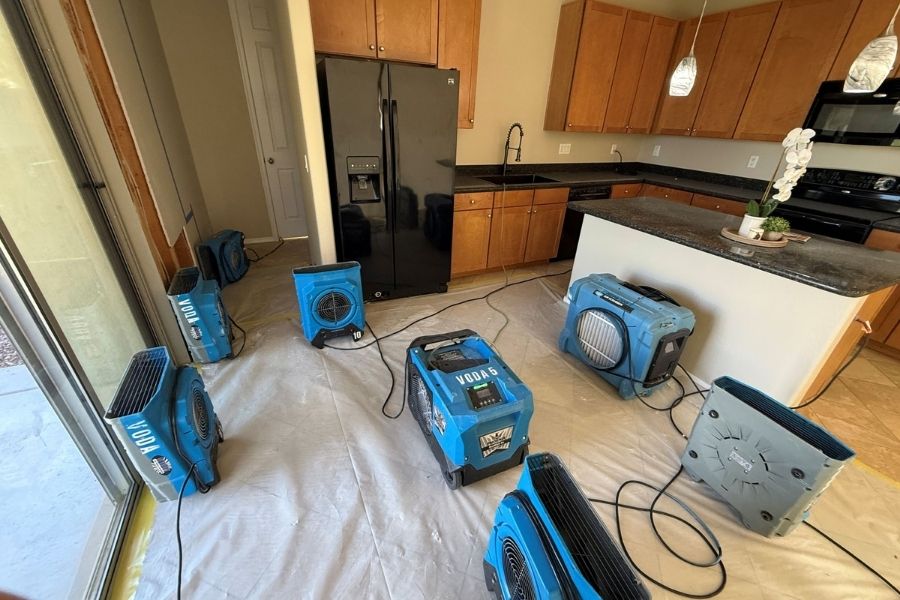
Professional house flooding cleanup uses industrial-grade extraction equipment, moisture meters, and commercial drying systems to remove water from places you can’t see or reach. IICRC-certified restoration technicians follow documented drying protocols that minimize secondary damage and give insurers the documentation they need to process claims.
Voda Cleaning & Restoration of Phoenix serves Chandler and the wider Phoenix area with a guaranteed 2-hour arrival time, 24/7/365. Overnight calls go directly to owner Jeff Ragan. The team is IICRC-certified in water, mold, and fire restoration and works directly with insurance companies to manage claims from start to finish.
Why Desert Heat Makes Secondary Damage Worse
This is specific to Chandler, Phoenix, Mesa, Scottsdale, Gilbert, and the rest of the East Valley, so it’s worth understanding. In cooler climates, homeowners sometimes have a little more time before secondary damage escalates. Here, they don’t.
Phoenix-area summer temperatures regularly exceed 105 degrees Fahrenheit. Combine that with post-monsoon humidity and the result is an environment where wet building materials deteriorate and mold colonizes faster than most people expect. Wood flooring can begin to warp and buckle within hours. Drywall that stays wet in summer heat becomes a mold surface very quickly.
Slab-on-grade construction, which is standard throughout the East Valley, also means there’s no basement or raised floor to help with drainage. Water on a slab spreads laterally under flooring and into walls with no natural outlet. That’s why rapid professional response matters more here than in many other parts of the country. If you’re also navigating storm-related flooding, see what storm damage restoration costs in the Scottsdale area as a point of reference.
First-Hour Flood Checklist for Chandler and Phoenix Homeowners
- Shut off the water source (main shutoff if needed)
- Cut power to affected areas at the breaker if electrical safety is in question
- Photo and video document all damage before touching anything
- Move valuables, electronics, and documents to a dry area
- Elevate furniture off wet flooring
- Open windows and run fans (skip HVAC if ducts may be affected)
- Call your insurance company and open a claim
- Call a professional restoration team with IICRC certification
Frequently Asked Questions
How long do I have before mold starts growing after a flood in Phoenix?
In Phoenix-area heat, mold can begin growing on wet building materials within 24 to 48 hours. Summer temperatures and post-monsoon humidity accelerate this timeline considerably. Calling a professional restoration team in the first hour is the most effective way to prevent mold growth after a flood.
Can I dry out a flooded room myself with fans and a dehumidifier?
For minor surface moisture, consumer-grade fans and dehumidifiers can help. But a real flood pushes water into walls, subfloor, and insulation that you can’t see or reach with household equipment. Professional restoration teams use moisture meters and industrial drying systems to address hidden moisture, which is what leads to mold and structural damage if left untreated.
Does homeowner’s insurance cover flood damage from a burst pipe in Chandler, AZ?
Most standard homeowner policies cover sudden and accidental water damage from internal sources like burst pipes or appliance failures. Flooding from external sources (like monsoon water entering from outside) typically requires a separate flood insurance policy. Call your insurance provider immediately after a flood event to confirm your coverage and open a claim.
What makes water damage worse in slab-on-grade homes like most in the East Valley?
Slab-on-grade construction, standard throughout Chandler, Gilbert, Mesa, and most of the Phoenix East Valley, means water has no basement or raised floor to drain into. Instead, it spreads laterally under flooring and into wall cavities. Combined with Arizona heat, this creates ideal conditions for rapid mold growth and structural warping if not addressed quickly by a professional restoration team.
Ready for Help? We’ll Be There in 2 Hours.
Voda Cleaning & Restoration of Phoenix serves Chandler and the entire Phoenix area around the clock. IICRC-certified. Free inspections. Direct insurance coordination.

More Blogs


Categories