


Table of Contents
- 1. The Golden Rule: Sudden vs. Gradual
- 2. What Arizona Homeowners Insurance Typically Does NOT Cover
- 3. Slab Leaks: A Special Arizona Situation
- 4. How the Insurance Claims Process Actually Works
- 4.1. Step 1: Stop the Source
- 4.2. Step 2: Document Everything Before Touching It
- 4.3. Step 3: Call a Restoration Company First (Yes, Before Your Adjuster Arrives)
- 4.4. Step 4: Notify Your Insurance Company
- 4.5. Step 5: Meet With the Adjuster
- 5. How Voda Works Directly with Your Insurance Adjuster
- 6. Common Claim Mistakes Arizona Homeowners Make
- 6.1. Waiting Too Long to Call
- 6.2. Cleaning Up Before Documenting
- 6.3. Describing Damage as Pre-Existing
- 6.4. Not Hiring a Certified Contractor
- 6.5. Assuming Flood Damage Is Covered
- 7. When Monsoon Season Complicates Everything
- 8. Frequently Asked Questions
- 8.1. Does Arizona homeowners insurance cover water damage from a slab leak?
- 8.2. Is monsoon flood damage covered by standard homeowners insurance in Arizona?
- 8.3. Do I have to use the restoration company my insurance company recommends?
- 8.4. Can I start cleanup and mitigation before my adjuster comes out?
You come home to a soaked carpet and a waterlogged wall, and before you even call a restoration company, the thought hits you: Is this covered? It’s one of the most common questions Arizona homeowners ask, and the answer is almost always “it depends.” If you’ve ever stared at a homeowners insurance policy and felt like you needed a law degree to understand it, you’re not alone. Professional water damage restoration is often fully or partially covered by insurance, but only when the right conditions are met. Let’s break down exactly what those conditions are, so you’re not caught off guard when it matters most.
By the Numbers: Water Damage Claims in the U.S.
- Water damage is the second most common homeowners insurance claim, behind wind and hail.
- The average claim payout for water damage and freezing is approximately $12,514, according to the Insurance Information Institute.
- Roughly 1 in 50 insured homes files a water related claim each year.
- Claims that involve gradual leaks or flooding from outside are frequently denied under standard policies.
The Golden Rule: Sudden vs. Gradual
Standard homeowners insurance policies in Arizona cover water damage that is sudden and accidental. That’s the core principle. If water intrudes unexpectedly, say a pipe bursts inside a wall on a hot July afternoon or your dishwasher line blows a fitting, your policy is likely on your side. If the damage crept in slowly over weeks or months, the policy almost certainly is not.
Insurance companies draw a hard line between those two scenarios because gradual damage is considered preventable through routine maintenance. The logic is: if you had caught that slow drip under the sink six months ago, the damage would not have happened. That framing might feel harsh when you’re standing in a soggy kitchen, but it’s how nearly every standard policy in Arizona is written.
What Counts as “Sudden and Accidental”?
- A pipe bursts due to pressure failure or heat stress (very common in Phoenix-area summers)
- A water heater fails suddenly and floods the garage or utility room
- A washing machine hose ruptures without warning
- A dishwasher or refrigerator ice maker line breaks unexpectedly
- A toilet supply line gives way and water spreads across the bathroom and into the hallway
- Roof damage from a monsoon storm causes water to enter through the ceiling
- An AC condensate pan overflows abruptly due to a clog
What Counts as “Gradual” (and Is Usually Denied)?
- A slow leak under a sink that went unaddressed for months
- A shower pan that has been seeping into the subfloor over time
- Ongoing roof leaks where the homeowner was aware of damage and delayed repair
- Cracks around window or door frames that allowed water infiltration over multiple rain events
- Mold resulting from long-term moisture buildup (unless tied to a covered event)
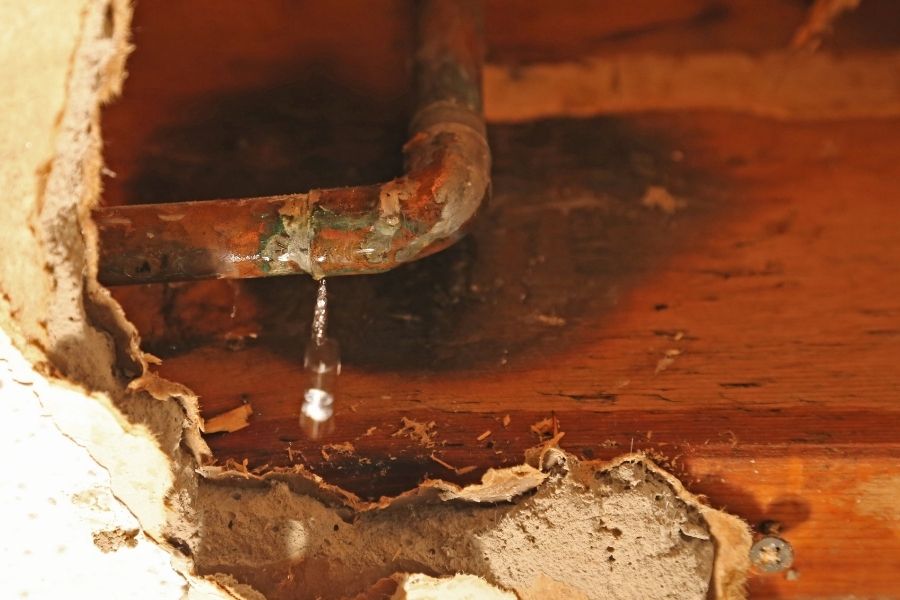
If your insurance company’s adjuster can establish that the damage existed prior to when you’re claiming it, the claim is almost always denied. Documentation of when and how the damage occurred is everything.
Not sure if your damage qualifies? Get a free inspection first.
Voda Cleaning & Restoration of Phoenix offers free inspections and works directly with your insurance adjuster. No guesswork, no runaround.
What Arizona Homeowners Insurance Typically Does NOT Cover
There are a few categories of water damage that standard policies exclude almost universally. Arizona homeowners run into these more often than they’d expect, especially after monsoon season.
| Water Source / Scenario | Typically Covered? | Why / Notes |
|---|---|---|
| Sudden pipe burst | Yes | Sudden and accidental; standard coverage |
| Appliance leak (sudden) | Yes | Covered if failure was sudden, not gradual |
| Monsoon storm water through roof | Usually Yes | Wind-driven rain damage is typically covered; pre-existing roof issues complicate claims |
| Ground flooding / surface water | No | Requires separate flood insurance (NFIP or private) |
| Slow / gradual leak | No | Considered a maintenance failure; nearly always excluded |
| Sewage backup | Sometimes | Requires a sewage/water backup rider; not standard |
| Slab leak (pipe under foundation) | Partial | Water damage above slab often covered; plumbing repair and slab access typically not |
| Mold from covered water event | Limited | If mold results from a covered claim, it may be included up to a cap |
| AC condensate overflow (gradual) | No | Treated as a maintenance issue in most policies |
The Flood Insurance Gap
This one trips up Arizona homeowners every monsoon season. Standard homeowners insurance does not cover flooding from outside the home, meaning water that enters from the ground, from street runoff, or from a wash overflowing. That is classified as flood damage and requires a separate flood insurance policy, typically through the National Flood Insurance Program (NFIP) administered by FEMA. The East Valley has seen significant monsoon-driven flooding events in recent years, and homeowners in Chandler, Gilbert, and Mesa are not automatically protected just because they have standard homeowners coverage.

Slab Leaks: A Special Arizona Situation
Because most homes in Chandler, Mesa, Gilbert, and the broader Phoenix area are built on slab foundations, slab leaks deserve their own conversation. A slab leak means a pipe has broken or cracked underneath the concrete foundation of your home, and water is migrating up through the slab.
Most policies will cover the resulting water damage to your floors, walls, and belongings if the pipe failure was sudden. What they typically will not cover is the cost to cut into the concrete and repair the pipe itself. That’s often an out-of-pocket expense, and it can be significant. If you’ve noticed warm spots on tile floors, unexplained increases in your water bill, or the sound of water running with all fixtures off, read through our post on 7 signs you have a slab leak under your Chandler home before calling your insurance company, so you know exactly what you’re dealing with.
Why IICRC Certification Matters for Your Claim
Water Damage Certified
IICRC WRT certification for proper extraction, drying, and documentation
Mold Remediation Certified
IICRC AMRT certification ensures safe, protocol-compliant mold work
Fire Damage Certified
IICRC FSRT certification for smoke, soot, and fire restoration
Insurers expect documentation from certified contractors. Using a non-certified company can complicate your claim. Voda Cleaning & Restoration of Phoenix is IICRC certified in all three primary restoration disciplines.
How the Insurance Claims Process Actually Works
Filing a water damage claim is not as simple as calling your insurer and waiting for a check. There’s a sequence of steps, and what you do (or don’t do) in the first 24 to 48 hours can shape the outcome significantly. Here’s what the process looks like from start to finish.
Step 1: Stop the Source
Shut off water at the source or at the main valve. Don’t wait. The longer water runs, the more damage accumulates, and the harder it becomes to argue that you took reasonable steps to limit harm. Insurers expect homeowners to mitigate further damage once a loss occurs.
Step 2: Document Everything Before Touching It
Take photos and video of every affected area before moving anything or beginning any cleanup. Capture standing water, waterlines on walls, damaged flooring, wet drywall, and any visible source of the water. Time-stamp your documentation if possible. This is your evidence file, and it matters enormously.
Step 3: Call a Restoration Company First (Yes, Before Your Adjuster Arrives)
This is where a lot of homeowners lose ground. They wait for the adjuster to come out before starting any mitigation, and in the meantime, moisture wicks deeper into walls, subfloor, and framing. Mold can begin developing in as little as 24 to 48 hours in Arizona’s heat. You don’t need to wait. A restoration company can begin emergency mitigation immediately, and the documentation they create during that process becomes part of your claim file. The team at house flooding cleanup can respond within two hours and start the documentation trail your adjuster will rely on.
Step 4: Notify Your Insurance Company
Call your insurer and open a claim. Give them the facts: when you discovered the damage, the apparent source, and what steps you’ve already taken. Don’t speculate about cause or cost at this stage. Let the documentation speak.
Step 5: Meet With the Adjuster
Your adjuster will assess the damage and determine coverage. Having a professional restoration company already on-site, with moisture readings, photos, and equipment logs, puts you in a much stronger position than presenting your own photos from your phone. The restoration company’s documentation is industry-standard and exactly what adjusters expect to see.
Voda Cleaning & Restoration of Phoenix: By the Numbers
How Voda Works Directly with Your Insurance Adjuster
One of the most stressful parts of a water damage event is feeling like you’re caught in the middle between the restoration company and your insurance company. Voda Cleaning & Restoration of Phoenix removes that friction. We work directly with insurance adjusters and understand exactly what documentation they need to process a claim efficiently.
That means moisture readings taken at regular intervals, drying logs, equipment placement records, and photo documentation at every stage of the mitigation process. All of it goes into a claim file that tells a clear, accurate story of what happened and what was done to fix it. We’ve seen how claims fall apart when documentation is weak or incomplete, and we make sure that doesn’t happen on our jobs. Homeowners in Chandler and across the East Valley tell us that having us handle adjuster communication directly took an enormous amount of pressure off their plates.
It’s also worth knowing that you are not required to use a contractor your insurance company recommends. You have the right to choose your own restoration company. What your insurer cares about is that the work is performed by a certified, qualified contractor whose documentation meets industry standards. Voda Cleaning & Restoration of Phoenix meets all of those benchmarks, as an IICRC-certified restoration contractor with certifications in water, mold, and fire restoration.
For a look at how homeowners have navigated these situations before calling us, our post on what to do in the first hour after water floods your Phoenix home walks through the exact sequence step by step.
Documentation Checklist: What to Gather Before Your Adjuster Arrives
- ✅ Time-stamped photos and video of all affected areas before any cleanup
- ✅ Photo of the water source (burst pipe, failed appliance, etc.)
- ✅ Photos of the water shut-off point (main valve or fixture valve)
- ✅ Any visible damage to belongings, flooring, walls, or ceilings
- ✅ Moisture readings if you have a meter, or from the restoration company
- ✅ Records of any maintenance or repairs done recently in the affected area
- ✅ Your insurance policy and declarations page (know your deductible)
- ✅ A written timeline of when you noticed the problem and what you did
Common Claim Mistakes Arizona Homeowners Make
A preventable error can turn a covered claim into a denied one. These are the mistakes we see most often.
Waiting Too Long to Call
Most policies require “prompt notice” of a loss. That’s not defined as a specific number of days, but waiting weeks to report a claim after discovering damage is a red flag for adjusters. Call your insurer as soon as you’ve documented the situation and begun mitigation.
Cleaning Up Before Documenting
The instinct to start mopping and pulling up wet carpet is completely understandable. But if you remove the evidence before anyone photographs it, you’ve made your adjuster’s job harder and your claim potentially weaker. Document first, clean second.
Describing Damage as Pre-Existing
Be careful with your language when speaking to adjusters. Saying “this area has always been a little damp” or “we’ve had problems with this pipe before” can be used to classify the damage as gradual or pre-existing. Stick to what you know about this specific event.
Not Hiring a Certified Contractor
Using a handyman or a non-certified company to handle water damage mitigation can create gaps in documentation that adjusters will notice. IICRC-certified contractors follow a standardized process that produces the kind of records insurance companies expect. Learn more about what Chandler homeowners should know before hiring a restoration company, including why certification matters so much when a claim is on the line.
Assuming Flood Damage Is Covered
After a heavy monsoon, it’s natural to assume your standard policy covers water that entered from outside. It almost certainly does not. If your home is in a flood-prone area of the East Valley, check whether you have a separate flood policy before the next storm season hits. Many homeowners in Chandler, Gilbert, and San Tan Valley are surprised to find they’re not covered when monsoon floodwater enters through doors or seeps up from saturated soil.
Questions about your specific situation?
Our team has over 30 years of combined experience navigating insurance claims for homeowners across Chandler, Mesa, Gilbert, and the greater Phoenix area. We offer free inspections and honest answers, even if you’re not ready to move forward.
When Monsoon Season Complicates Everything
Arizona’s monsoon season, which runs roughly from June through September, creates a unique insurance landscape. Wind-driven rain that enters through a damaged roof, a broken window seal, or a compromised door frame during a storm is typically covered as storm damage. Water that pools on the ground and enters through the foundation or a door threshold is not covered under standard homeowners policies. That’s surface flooding, and it requires separate flood coverage.
This distinction matters enormously in communities like Chandler, Tempe, and Scottsdale, where monsoon microbursts can dump significant rainfall in a short window. You might have water coming in from two different directions during the same storm event, and the coverage question is different for each source. Our post on how monsoon season creates water damage risks most Arizona homeowners miss covers the seasonal risks in more detail.
If you’re uncertain about what happened during a storm event, a free inspection from a certified restoration company can help you identify the source and sequence of water entry before you open a claim. Going into the claims process knowing exactly what happened puts you in a significantly stronger position.
Frequently Asked Questions
Does Arizona homeowners insurance cover water damage from a slab leak?
It depends on what part of the damage you’re claiming. Most standard policies in Arizona will cover the resulting water damage to your floors, walls, and belongings if the slab leak caused a sudden and accidental loss. However, the actual cost of breaking through the concrete and repairing the pipe is typically excluded. Always review your specific policy language, and have a certified restoration company document the damage thoroughly before your adjuster visits.
Is monsoon flood damage covered by standard homeowners insurance in Arizona?
No. Standard homeowners insurance does not cover flood damage from surface water, regardless of the cause. If water entered your home from the ground, from runoff, or from a wash overflowing during a monsoon event, you need separate flood insurance through the National Flood Insurance Program (NFIP) or a private flood policy. Wind-driven rain that enters through a damaged roof or window during a storm may be covered under your homeowners policy, but ground-source flooding is not.
Do I have to use the restoration company my insurance company recommends?
No. You have the right to choose your own licensed, certified restoration contractor. Your insurance company may have a preferred vendor network, but you are not required to use those companies. What your insurer cares about is that the work is performed by a qualified contractor who follows industry protocols and provides proper documentation. An IICRC-certified company like Voda Cleaning & Restoration of Phoenix meets those standards and works directly with adjusters regardless of your insurer.
Can I start cleanup and mitigation before my adjuster comes out?
Yes, and in most cases you should. Insurance policies typically require policyholders to take reasonable steps to prevent further damage after a loss. Waiting days for an adjuster to arrive while water continues to migrate can actually hurt your claim. Document everything thoroughly before touching anything, then begin mitigation immediately. A certified restoration company will create a complete documentation record during the mitigation process that serves as evidence for your claim.

More Blogs


Categories