


Smoke damage and soot damage are two different problems that require two different solutions. After a fire, most homeowners see the black residue on their walls and assume that’s the whole problem. It’s not. The visible mess is soot. The invisible contamination hiding inside your walls, ductwork, and fabrics is smoke damage. Knowing the difference matters because the wrong cleanup approach can spread contamination and make things worse. That’s why professional fire and smoke damage restoration treats each one separately.
What Is Smoke Damage?
Smoke damage is the invisible, penetrating contamination that hot gases and ultrafine particles leave behind after a fire. These particles are small enough to pass through drywall, settle inside HVAC systems, and absorb into carpet padding, insulation, and fabrics at a molecular level. That’s why a home can smell like smoke months later, even after every surface has been scrubbed.
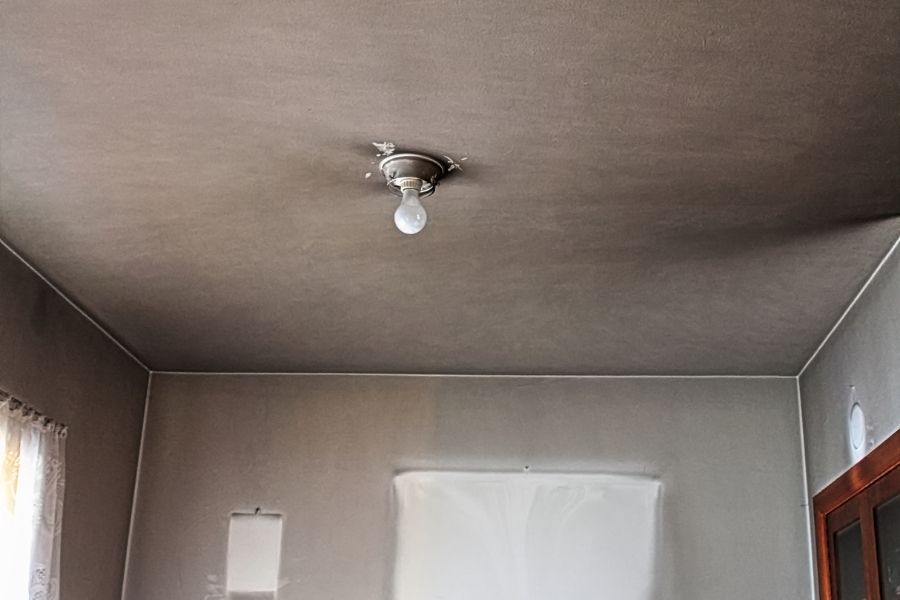
Smoke damage often shows as yellowish discoloration, but the real contamination goes much deeper than what you can see.
The health effects are real, too. Smoke particles irritate the lungs, trigger allergic reactions, and worsen asthma. The EPA’s indoor air quality guidelines flag post-fire smoke contamination as a significant indoor health concern, especially for children and older adults.
What Is Soot Damage?
Soot is the black, powdery or greasy residue that fires leave on surfaces you can see and touch. It’s made of carbon particles and other byproducts of incomplete combustion. Not all soot is the same, though. Dry soot from wood or paper fires is powdery. Oily soot from burning plastics and synthetics is sticky, smears easily, and bonds to surfaces.
Soot is also acidic. Left on surfaces for even a few days, it etches metal finishes, discolors paint, and permanently stains porous materials like grout and unsealed wood.
Dealing with smoke or soot damage? Don’t wait for it to get worse.
Schedule a Free InspectionWhy Does the Difference Matter?
Each type of contamination requires a completely different cleanup strategy, and treating one without the other leaves the job half done. Soot sits on surfaces and needs careful physical removal. Smoke hides inside materials and requires thermal fogging, ozone, or hydroxyl treatment to neutralize odors at the molecular level.
| Characteristic | Smoke Damage | Soot Damage |
|---|---|---|
| Visibility | Often invisible, detected by smell | Visible black or gray residue |
| Location | Inside walls, ducts, insulation, fabrics | On exposed surfaces and finishes |
| How it spreads | Travels through HVAC and air currents | Settles by gravity, sticks on contact |
| DIY risk | Cannot be reached without pro equipment | Wiping smears and embeds it further |
| Health impact | Ongoing respiratory irritation, VOCs | Skin irritation, ingestion risk |
Why DIY Cleanup Usually Makes Things Worse
Most homeowners who try fire cleanup on their own end up spreading contamination instead of removing it. A wet cloth smears oily soot into the surface. A dry cloth pushes powdery soot into pores and grain lines. Either way, the damage becomes harder and more expensive to fix professionally.
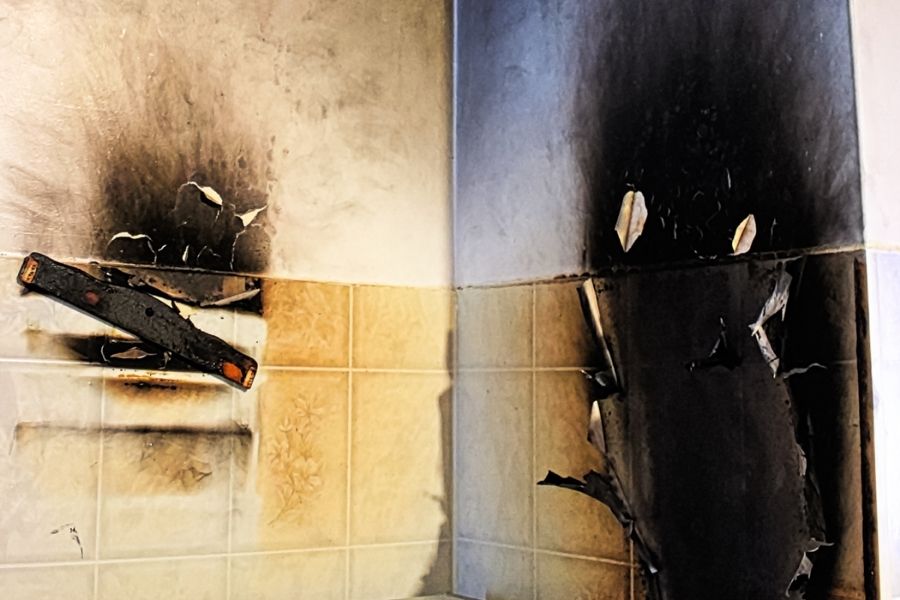
Soot buildup on walls and tile may look wipeable, but incorrect cleaning embeds residue into porous materials and finishes.
Smoke is even trickier. You can’t wipe away contamination that’s absorbed into drywall. Running a standard air purifier helps with airborne particles but won’t touch the smoke bonded to insulation, carpet fibers, or the inside of your ductwork.
Common DIY mistake: using scented sprays after a fire. These mask the smell temporarily but do nothing about the smoke particles embedded in your home’s materials. Once the spray wears off, the odor returns because the contamination is still there.
How Do Smoke and Soot Affect Indoor Air Quality Differently?
Soot particles become airborne again when disturbed, while smoke contamination continuously off-gases volatile organic compounds from the materials it has penetrated. Your HVAC system circulates both from room to room, carrying soot particles and smoke odors into areas the fire never reached. That’s why professional air duct cleaning is a critical step in fire damage recovery.
Soft materials absorb the most contamination. Carpets, upholstered furniture, and curtains trap smoke compounds and soot. If you’re dealing with this, it’s worth looking into professional carpet cleaning costs in your area. It’s almost always more effective than DIY after fire exposure.
24-48 Hours
The window before soot begins permanently etching surfaces
Every Room
Smoke travels through HVAC to areas the fire never touched
3 Types of Soot
Dry, oily, and protein, each needing different removal methods
What Does Professional Smoke and Soot Remediation Involve?
Professional restoration treats smoke and soot as two separate problems, using different equipment and techniques for each. Technicians certified to IICRC S700 fire and smoke restoration standards follow a systematic process that prevents cross-contamination.
For soot, the process starts with dry cleaning, using chemical sponges and HEPA vacuums to lift residue without smearing. Wet cleaning with specialized soot removers follows. For smoke, technicians use thermal fogging, hydroxyl generators, or ozone treatment to break down odor molecules at the source. Air scrubbers run continuously to capture airborne particles.
IICRC Certified
Fire & Smoke
IICRC Certified
Water Restoration
IICRC Certified
Mold Remediation
This is also why professional odor removal is its own step. Soot can be gone and a home can look clean, but if smoke odor lingers, the job isn’t done. Fabric-covered furniture is one of the biggest odor reservoirs, which is why upholstery cleaning is often part of a full fire damage recovery.
What Professional Fire Damage Restoration Covers
- ✓ Soot removal using type-specific methods
- ✓ Smoke odor neutralization through thermal fogging or ozone
- ✓ HEPA air filtration and air scrubbing
- ✓ HVAC and ductwork decontamination
- ✓ Soft goods assessment (carpets, upholstery, clothing)
- ✓ Insurance documentation and claims coordination
Voda Cleaning & Restoration of Phoenix offers free fire damage inspections, 24/7/365.
Frequently Asked Questions
Can I clean soot off my walls myself?
Small areas of dry soot can sometimes be addressed with a chemical sponge, but oily or protein-based soot requires professional solvents. Wiping with a wet cloth smears the residue into the surface and makes professional restoration more difficult.
How long does smoke odor last without professional treatment?
Smoke odor can persist for months or years. The particles embed into porous materials at a molecular level, and standard cleaning products won’t reach them. Professional thermal fogging or ozone treatment is typically the only way to fully eliminate the smell.
Does homeowner’s insurance cover smoke and soot cleanup?
Most policies cover fire damage restoration, including smoke and soot cleanup. Voda Cleaning & Restoration of Phoenix works directly with insurance companies to coordinate claims and documentation.
Why do rooms smell like smoke even if the fire was somewhere else?
Smoke travels through your HVAC system, wall cavities, and electrical outlets, carrying particles into rooms the fire never reached. That’s why whole-home treatment, including duct cleaning, is necessary after even a small fire. Learn more about how quickly secondary damage develops when fire-related contamination isn’t handled promptly.
If your home has experienced fire, smoke, or soot damage, Voda Cleaning & Restoration of Phoenix is here to help. Our IICRC-certified team responds 24/7 with a guaranteed 2-hour arrival time.

More Blogs


Categories