


Table of Contents
Why a Post-Storm Walkthrough Matters in Chandler
After a major storm rolls through Chandler, most homeowners relax once the wind dies down. But the real risk shows up quietly, hours or days later. Water behind stucco, under roof tiles, or along your slab can trigger mold growth and repair bills that multiply fast in Arizona’s heat.
This checklist covers eight areas to inspect after any major weather event, and explains why each ties directly to water damage restoration concerns that professionals see every season. Voda Cleaning & Restoration of Phoenix, an IICRC-certified restoration company based in Chandler, responds to post-storm calls across the East Valley year-round.
Spotted Storm Damage? Don’t Wait.
Free inspections and guaranteed 2-hour response across Chandler, Gilbert, Mesa, and the entire East Valley.
1. Your Roof and Roof Tiles
Start at the top. Arizona’s concrete and clay tile roofs handle heat well, but they’re vulnerable to high winds and hail. Look for cracked, shifted, or missing tiles from ground level using binoculars or a phone camera. Even one displaced tile creates an entry point for water, and the next downpour could be hours away.
Water entering through a compromised roof can saturate attic insulation and soak into drywall ceilings. These hidden moisture pockets can lead to mold growth within 24 hours.
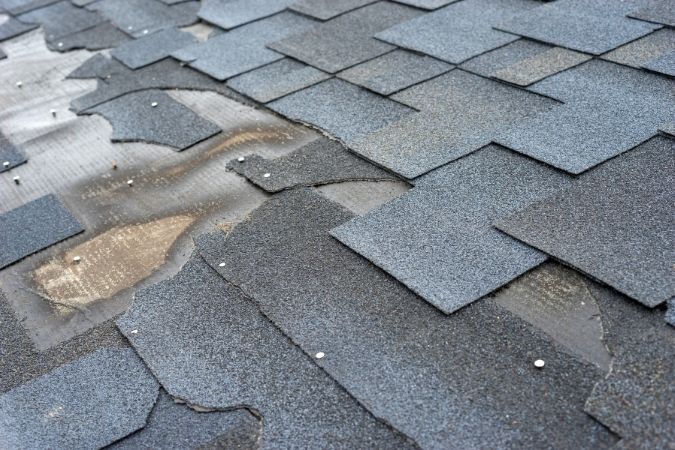
Even small shifts in roof tiles can let water in during the next rain event.
2. Attic and Ceiling Spaces
If your roof took any impact, check the attic next. Grab a flashlight and look for wet insulation, stains on the underside of the roof deck, or daylight through gaps. In Chandler’s extreme summer heat, a wet attic becomes a pressure cooker for mold. According to the EPA’s guide on mold and moisture, controlling moisture is the key to controlling mold.
3. Window and Door Frames
Wind-driven rain is a hallmark of Arizona monsoons. Check every window and door frame for dampness along the sill, bubbling paint, or soft drywall around the edges. Sliding glass doors are especially prone to leaking at the track when rain comes in sideways.
Run your hand along the bottom edge of each frame. Damp or cool to the touch means water got in. This same issue hits homes in Mesa, Tempe, and Scottsdale regularly. Caught early, it’s a simple fix. Ignored, it means drywall replacement.
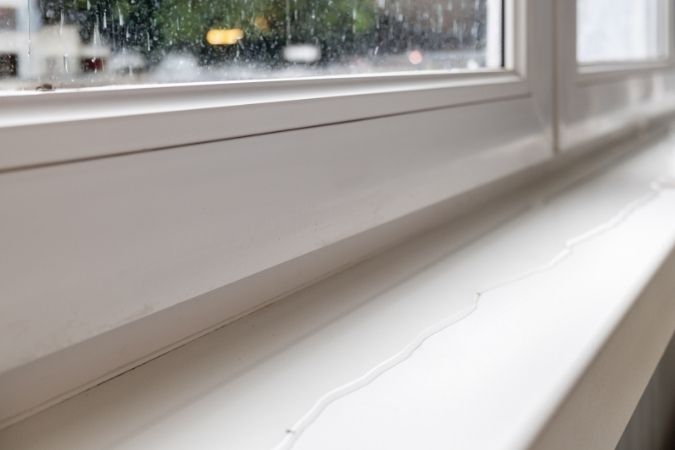
Water pooling on a window sill after a storm is a clear sign of seal failure or wind-driven rain intrusion.
Quick Post-Storm Inspection Checklist
☑ Roof tiles: cracked, shifted, or missing?
☑ Attic: wet insulation, stains, or daylight gaps?
☑ Windows and doors: damp sills, bubbling paint?
☑ Exterior walls: new cracks in stucco?
☑ AC unit: debris around condenser, unusual sounds?
☑ Garage: water pooling at the door seal?
☑ Yard drainage: standing water near foundation?
☑ Slab entry points: moisture around pipe penetrations?
4. Exterior Walls and Stucco
Walk the full perimeter. Look for new stucco cracks, gaps where caulking pulled away, or darker patches that indicate absorbed moisture. Stucco is durable, but not waterproof. When cracks form, water migrates behind the surface and sits against sheathing or framing. Homes across Gilbert, Queen Creek, and San Tan Valley deal with this after every major storm. If you’re in Chandler, storm damage restoration in Chandler is available around the clock.
5. Your AC Unit
Your outdoor condenser is exposed to every storm. Check for debris, bent condenser fins, or unusual noises when the system kicks on. Here’s the connection most people miss: a struggling AC produces more condensation. That extra moisture often drips where it shouldn’t, creating conditions that require mold remediation. AC condensation is one of the most common mold triggers in the Phoenix area.
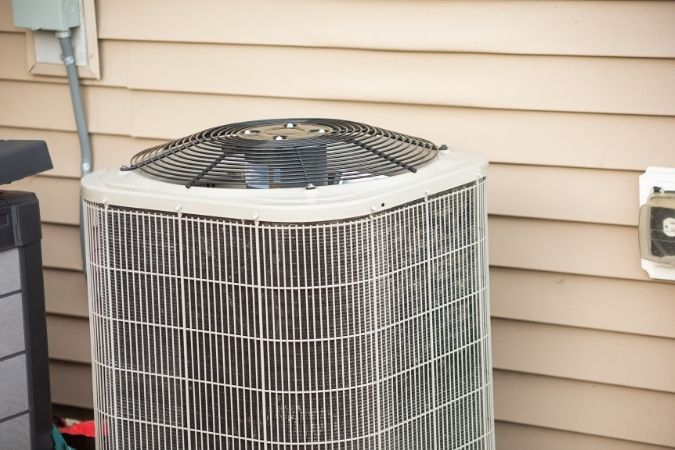
Clear debris from around your condenser after every storm to keep airflow and drainage working properly.
6. Your Garage
Garages are often the last place homeowners check, and one of the most vulnerable. Look at the bottom seal of your garage door for gaps and check the floor for stains or dirt lines. If the garage shares a wall with living space, water can migrate into interior walls without visible signs from inside.
24-48 Hours
How quickly mold can begin growing after water exposure
2 Hours
Voda’s guaranteed response time across the East Valley
30+ Years
Combined industry experience on the Voda Phoenix team
7. Perimeter Drainage and Yard Grading
Walk along your foundation and look for standing water, soil erosion, or shifted grading. Water should always slope away from your home. Check downspouts too. In many Chandler neighborhoods, desert landscaping and gravel shift during heavy rain, redirecting water toward the foundation.
8. Slab Entry Points
Chandler homes sit on concrete slab foundations, and every pipe or utility line that enters through the slab is a potential water entry point. After a storm, check around your water heater, plumbing penetrations, and exterior hose bibs for moisture or seepage.
The warning signs of slab water damage are subtle: a warm spot on the floor, a faint musty smell, or slightly higher water bills. Learn more about slab leak warning signs to know what to watch for.
| Area | What to Look For | Risk if Ignored |
|---|---|---|
| Roof tiles | Cracks, shifts, missing tiles | Ceiling leaks, attic mold |
| Attic | Wet insulation, stains | Mold, drywall collapse |
| Windows/Doors | Damp sills, bubbling paint | Hidden wall moisture |
| Exterior walls | Stucco cracks, dark patches | Water behind walls |
| AC unit | Debris, bent fins, odd sounds | Excess condensation, mold |
| Garage | Gap at door seal, stains | Water in shared walls |
| Drainage | Standing water, shifted soil | Foundation moisture |
| Slab entry points | Moisture near pipes | Slab leaks, hidden damage |
What to Do If You Find Something
If any of these checks reveal water intrusion, don’t wait. In the Phoenix area’s heat, moisture turns into mold fast. The real cost of waiting after water damage is always higher than responding quickly. Document everything with photos and timestamps, especially if you plan to file an insurance claim.
Voda Cleaning & Restoration of Phoenix offers free inspections and works directly with insurance companies. The team is available 24/7/365 with a guaranteed 2-hour response across Chandler, Phoenix, Mesa, Gilbert, and the entire East Valley. For storm damage restoration, getting a professional on-site quickly matters most.
Storm Damage Doesn’t Wait. Neither Should You.
Free inspections. Insurance coordination. 24/7 emergency response across the East Valley.
Frequently Asked Questions
How soon after a storm should I inspect my Chandler home?
Inspect as soon as conditions are safe, ideally within the first few hours. The sooner you identify water intrusion, the better your chances of preventing mold growth and secondary damage.
Can I check my roof myself after a monsoon?
You can inspect from ground level using binoculars or a phone camera. Don’t climb onto the roof when tiles may be loose or wet. If you spot anything concerning, call a professional for a closer look.
What if I smell something musty but don’t see visible damage?
A musty smell after a storm often indicates hidden moisture behind walls, under flooring, or in the attic. A professional assessment using thermal imaging and moisture meters can pinpoint the source. Learn more about common mistakes homeowners make after monsoon flooding.
Does homeowners insurance cover storm damage in Arizona?
Most standard policies cover sudden storm damage, including wind and rain intrusion. Damage from gradual neglect is typically excluded. The Ready.gov flood preparedness guide has helpful coverage information. Voda Cleaning & Restoration of Phoenix works directly with insurance companies to simplify claims.

More Blogs


Categories