


Table of Contents
- 1. Mistake #1: Turning on Fans Before Removing Standing Water
- 2. Mistake #2: Delaying Professional Help
- 3. Mistake #3: Ignoring Hidden Moisture in Walls and Subfloors
- 4. Mistake #4: Forgetting to Document Everything for Your Insurance Claim
- 5. Mistake #5: Assuming "It Dried Out" Means the Problem Is Over
- 6. Frequently Asked Questions About Monsoon Flood Recovery
Monsoon season in Chandler hits fast and hard. One minute you’re watching dust clouds roll across the East Valley, and the next, water is pooling in your garage or seeping under your front door. What you do in those first few hours after floodwater enters your home can make or break your recovery. And unfortunately, most homeowners get at least one thing wrong.
As an IICRC-certified water damage restoration team, Voda Cleaning & Restoration of Phoenix sees these same costly mistakes every year. Here are five that lead to bigger problems, and how to avoid the hidden monsoon water damage risks most homeowners miss.
Mistake #1: Turning on Fans Before Removing Standing Water
It makes total sense. You see water on the floor, and your first instinct is to grab every fan in the house and start blowing. The problem? Fans don’t remove water. They move air. And blowing air across standing water actually pushes moisture deeper into porous materials like drywall, carpet padding, and wood subfloor.
Professional water mitigation starts with extraction: truck-mounted pumps and industrial vacuums that physically remove standing water before any drying equipment gets set up. Skip this step, and you’re spreading the problem to areas that weren’t affected.
If your Chandler home floods during a monsoon, resist the fan urge. Get the water out first, then worry about drying.
Dealing With Monsoon Flooding in Chandler?
Our IICRC-certified team responds within two hours, 24/7/365. Free inspections, direct insurance coordination.
Mistake #2: Delaying Professional Help
Arizona’s heat tricks homeowners into thinking moisture problems will resolve on their own. It’s 110°F outside, so how could anything stay wet? Here’s the catch: the inside of your walls, carpet pad, and spaces underneath cabinetry don’t get that same dry desert air.
According to Ready.gov, mold can begin growing within 24 to 48 hours after water exposure. During monsoon season in the Phoenix metro, humidity spikes into the 50 to 70 percent range, which can shorten that timeline even further. Every hour you wait increases the risk of secondary damage: mold growth, warped flooring, and compromised drywall.
Homeowners across Chandler, Gilbert, and Mesa tell us they wish they’d called sooner. Here’s a guide on what to do in the first hour after water floods your home.
Why Speed Matters in Arizona
Mold can colonize damp materials in as few as 24 hours. In Phoenix’s monsoon humidity, structural drying that takes 3 days under normal conditions can stretch to 5 or more without professional equipment. The gap between “minor water event” and “major restoration project” is often just hours.
Mistake #3: Ignoring Hidden Moisture in Walls and Subfloors
Just because the surface looks dry doesn’t mean the problem is gone. Chandler’s slab-on-grade construction means water often migrates beneath flooring without any visible signs on top. Moisture gets trapped between the concrete slab and your flooring material, creating a breeding ground for mold and bacteria you can’t see.
Professional storm damage restoration teams use infrared cameras and pin-type moisture meters to map exactly where water has traveled. These tools detect moisture behind walls, under tile, and inside ceiling cavities you’d never spot otherwise. The EPA recommends addressing hidden moisture promptly because mold colonies can establish in concealed spaces long before you notice any smell or discoloration.

Hidden mold colonies often grow behind drywall for weeks before homeowners notice any signs.
If your home took on water during a storm, a thorough moisture assessment isn’t optional. It’s essential.
☑ Post-Monsoon Moisture Checklist for Chandler Homeowners
✓ Check baseboards and lower drywall for swelling, bubbling, or discoloration
✓ Feel carpet padding near exterior walls (wet padding often hides under dry carpet)
✓ Inspect under sinks, behind toilets, and inside cabinet toe kicks
✓ Watch for condensation on windows or AC vents after a storm
✓ If anything seems off, request a professional moisture assessment with thermal imaging
Mistake #4: Forgetting to Document Everything for Your Insurance Claim
In the rush to clean up, documentation is usually the last thing on your mind. But skipping this step can cost you thousands when you file your claim. Insurance adjusters need evidence of the damage, and vague descriptions won’t get you very far.
Before you move, clean, or throw anything away: take photos and videos of every affected area from multiple angles. Capture waterline marks on walls, damaged belongings, and standing water. Save receipts for emergency supplies or temporary repairs. Write down a timeline of when flooding started and when you noticed damage.
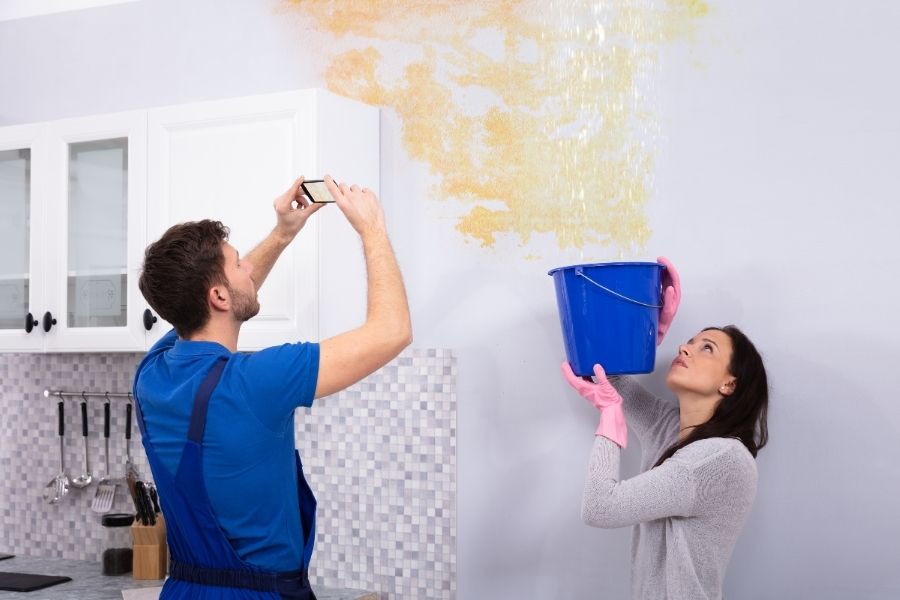
Photograph every affected area before cleaning up. Your insurance claim depends on thorough documentation.
Not sure how insurance handles monsoon water damage? This breakdown of water damage and homeowners insurance in Arizona covers what’s typically included. Voda Cleaning & Restoration of Phoenix works directly with insurance companies, helping Chandler homeowners navigate the claims process with professional documentation.
| What to Document | Why It Matters |
|---|---|
| Photos/videos of every affected room | Proves scope and severity of damage to your adjuster |
| Waterline marks on walls and furniture | Shows the water level and extent of flooding |
| Receipts for emergency supplies or repairs | Eligible for reimbursement under most policies |
| Written timeline of events | Establishes when damage occurred and response time |
Mistake #5: Assuming “It Dried Out” Means the Problem Is Over
This is the most dangerous mistake on the list. Your floors feel dry. The walls look fine. Everything seems normal. But moisture trapped inside structural materials doesn’t follow the same evaporation timeline as surface water, especially in slab-on-grade homes common throughout Chandler and the Phoenix metro.
Without proper verification using moisture meters and thermal imaging, there’s no way to confirm your home is actually dry. Residual moisture leads to mold growth that requires professional remediation, wood rot, and structural weakening. We regularly respond to calls from homeowners who experienced flooding months earlier and assumed it resolved on its own.
Trust your senses for comfort. Trust equipment and trained professionals for verification.
Monsoon Flood Recovery by the Numbers
24 hrs
Mold growth can begin
2 hrs
Our guaranteed response time
30+
Years combined experience
IICRC Certified
Water Damage Restoration
IICRC Certified
Mold Remediation
IICRC Certified
Fire Damage Restoration
Don’t Let a Monsoon Turn Into a Mold Problem
Free inspections, direct insurance coordination. Serving Chandler, Gilbert, Mesa, Tempe, and the entire East Valley.
Frequently Asked Questions About Monsoon Flood Recovery
How quickly should I call a restoration company after a monsoon flood?
Call within the first hour if possible. Mold can start growing in 24 to 48 hours, and every additional hour of delay increases the risk of secondary damage and higher restoration costs.
Can I use my HVAC system to help dry out flood damage?
Running your HVAC after a flood can spread contaminated moisture through your ductwork and into unaffected rooms. Have a professional restoration team assess whether it’s safe to turn your system back on before running it.
Does homeowners insurance cover monsoon flood damage in Arizona?
Standard homeowners insurance typically covers sudden storm water damage but may exclude flooding from rising water. Review your policy and consider separate flood insurance if you’re in a flood-prone area of Chandler or the East Valley.
What’s the difference between water extraction and water mitigation?
Extraction removes standing water using pumps and industrial vacuums. Mitigation is the broader process: extraction, structural drying, dehumidification, and preventing further damage.

More Blogs


Categories